- Matures
- 12–24 months
- Harvest
- Over a period · Perennial
- Sun
- 6–8+ hrs
- Spacing
- 36 in
Planting window
When to sow, by microclimate — foggier blocks run a different calendar than sunnier ones.
| Jan | Feb | Mar | Apr | May | Jun | |
|---|---|---|---|---|---|---|
| Foggy | ● | ◐ | ◐ | |||
| Sunny | ● | ● | ● | ◐ |
| Jul | Aug | Sep | Oct | Nov | Dec | |
|---|---|---|---|---|---|---|
| Foggy | ● | |||||
| Sunny | ◐ |
Sunlight
How well it does at each level of direct sun per day.
Soil depth
Root room it needs — useful for sizing raised beds and containers.
Soil pH
The soil acidity it grows best in — most crops sit just below neutral, so this mostly matters for heavily amended or long-reused beds.
- Preferred range
- pH 5.5–6.5
Spacing
Room each plant needs — along the row and between rows — for sizing beds.
- In-row
- 36 in
- Between rows
- 48 in
Growth habit
The shape it makes in the bed and how tall it gets — what tells you whether to give it a trellis, a stake, or just room.
- Habit
- Upright
- Mature height
- 2–4 ft
Stands on its own; the tallest types appreciate a stake in wind.
Growing in containers
Whether it does well in a pot, planter, or window box — the SF balcony-and-deck question, weighing its footprint, form, and staying power, not just root depth.
Workable in a large, deep container with attentive watering and feeding.
How to start it
Sow it where it grows, or raise it under cover and set it out — and how far ahead to start the seedlings if it's the latter.
- Usually
- Direct-sow
Sown straight into the bed it will grow in.
Getting started
How it goes in the ground — how deep to sow or set it, and the soil temperature it needs to wake up. The cold-soil floor is the real limiter for direct-sowing in a foggy SF spring.
- Started from
- From crowns
- Ideal soil temp
- 40–75°F
- Set depth
- 1 in
Sprouts between 40–75°F; happiest around 40–75°F.
Watering & feeding
How thirsty and how hungry it is — the water it wants and how much feeding the bed needs to keep it producing. In the fog belt even a thirsty crop drinks less than it would inland.
- Water need
- Moderate
- Feeding
- Heavy feeder
Wants steady, even moisture — roughly an inch a week, a little more in a heat spell.
Hungry — enrich the bed well before planting and feed through the season to keep it going.
An established perennial that wants regular water in dry spells — keep the soil moist, never soggy. A heavy feeder: work in plenty of compost or manure and feed nitrogen each year.
Pests & diseases
What tends to trouble this crop — what it is, what you'll see, and what to do about it, least-toxic first.
Rarely troubled by pests or diseases when kept healthy. The rhubarb curculio may pierce stalks; overly wet soil invites root rots. (Utah State Extension)
Harvest & storage
How to tell it's ready to pick, and how to keep it once it's in.
- Keeps
- WeeksHolds a week or two in the fridge.
- Ready to harvest
- Pull individual stalks with a twist once they're a good size (from the second year on); eat the stalks only — the leaves are poisonous.
- Storing
- Refrigerate the stalks unwashed in the crisper; they keep a week or two.
Culinary use & nutrition
What it's for in the kitchen, and the nutrients a 100 g raw serving is a notable source of.
In the kitchen
- Baked & sweet
Nutrition highlights
- Excellent source
- Vitamin K
Share of the Daily Value in a 100 g raw serving (USDA FoodData Central).
Pollinators & wildlife
What this crop offers the garden's wildlife once it flowers — often the payoff for letting a bolting plant stand.
No notable draw for pollinators — its flowers offer them little.
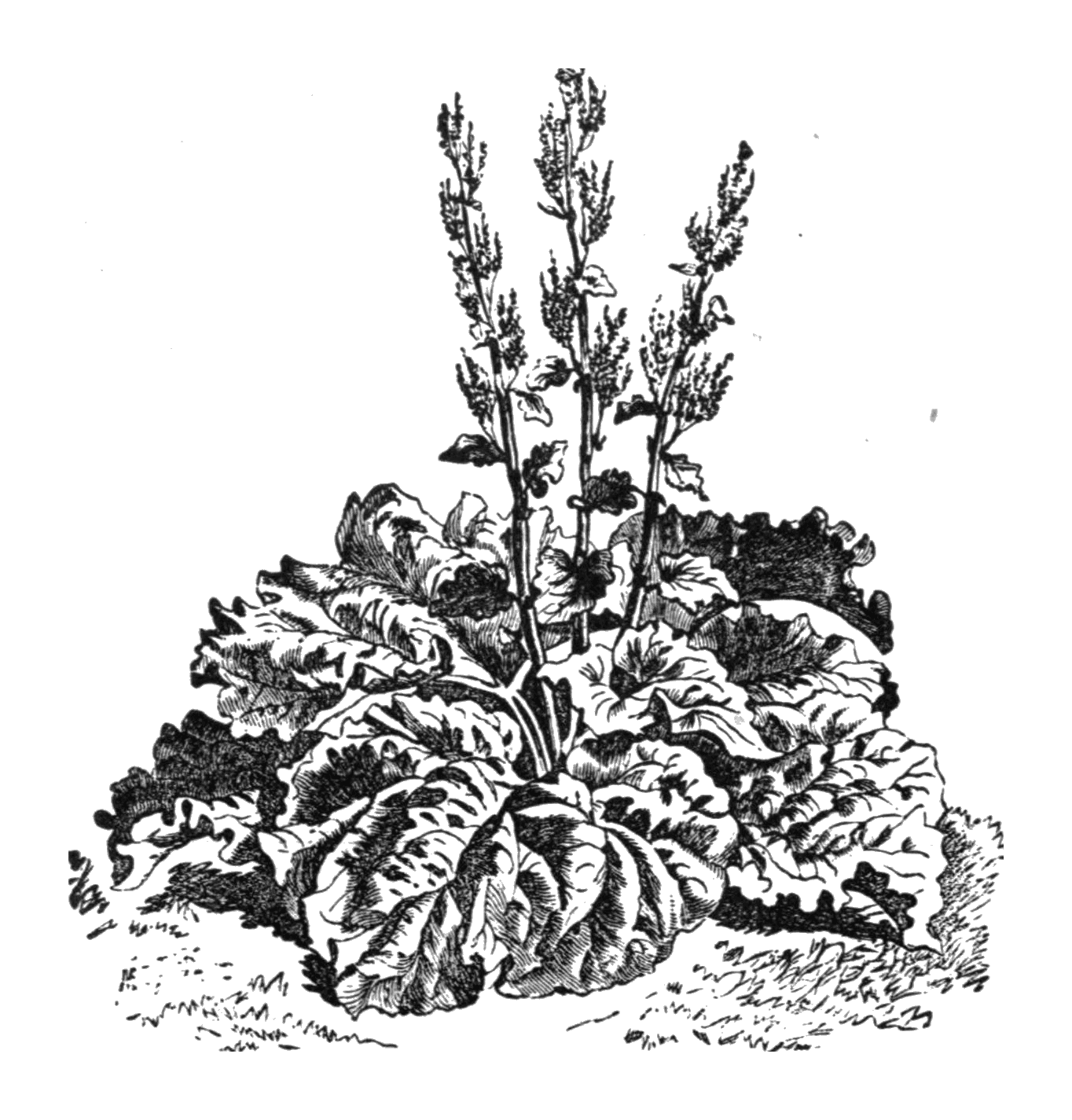
Rhubarb can throw a tall panicle of hundreds of small white flowers, but the standing advice is to cut that stalk off the moment it appears so the plant keeps its energy in leaf stalks — and nothing in the growing literature credits the bloom with feeding anything, so a well-kept crown offers the garden's insects nothing.
Sources
Growing data on this page is drawn from Utah State University Extension, Ohio State University Extension, and the other references on our sources page.