Leek
Allium porrum
Amaryllidaceae · onion family
Origin · Mediterranean · Western Asia
- Matures
- 4–5 months
- Harvest
- Once · Annual
- Sun
- 4–8+ hrs
- Spacing
- 2–4 in
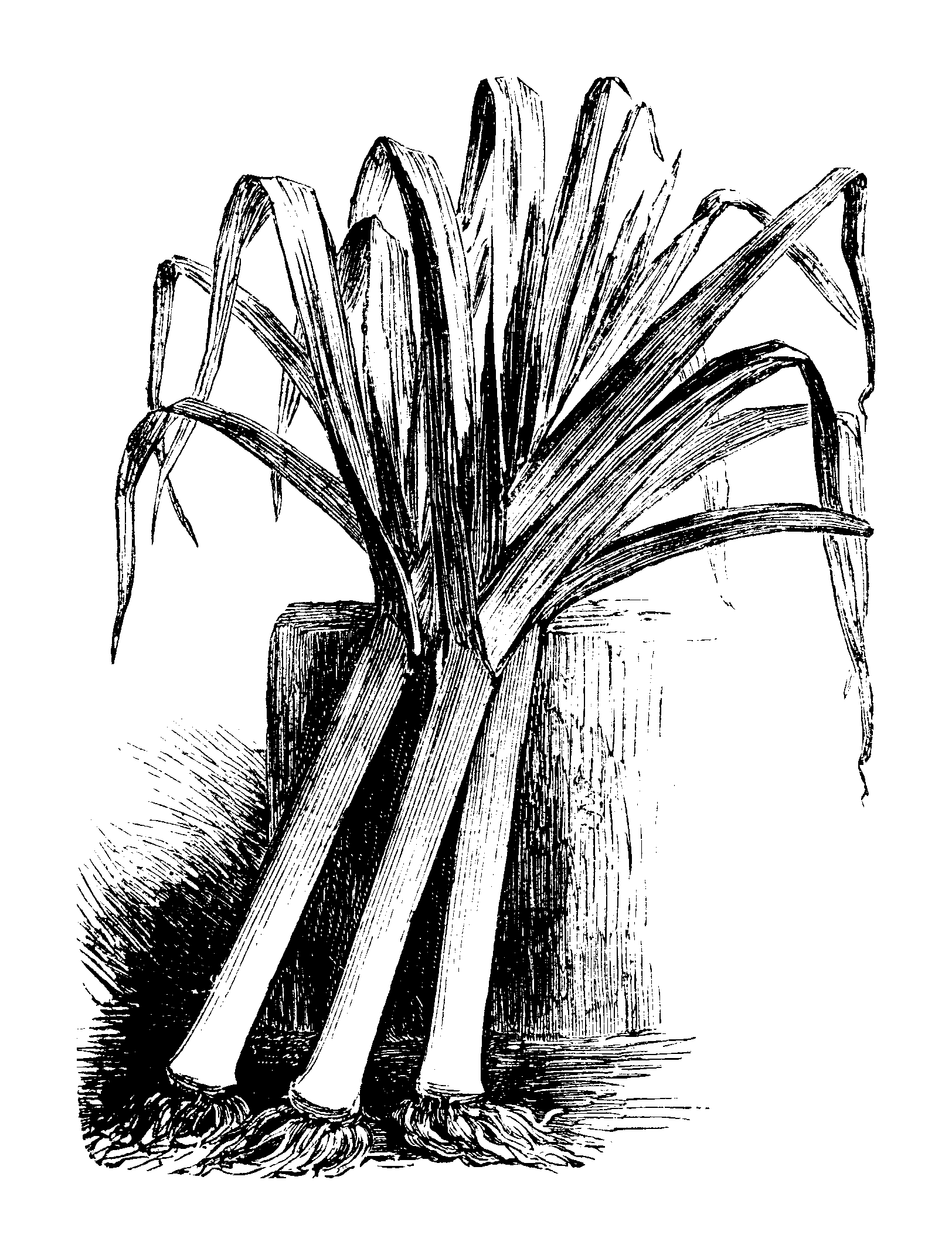
Planting window
When to sow, by microclimate — foggier blocks run a different calendar than sunnier ones.
| Jan | Feb | Mar | Apr | May | Jun | |
|---|---|---|---|---|---|---|
| Foggy | ● | ● | ● | ● | ||
| Sunny | ● | ● | ● |
| Jul | Aug | Sep | Oct | Nov | Dec | |
|---|---|---|---|---|---|---|
| Foggy | ||||||
| Sunny |
Sunlight
How well it does at each level of direct sun per day.
Soil depth
Root room it needs — useful for sizing raised beds and containers.
Soil pH
The soil acidity it grows best in — most crops sit just below neutral, so this mostly matters for heavily amended or long-reused beds.
- Preferred range
- pH 6.0–6.5
Spacing
Room each plant needs — along the row and between rows — for sizing beds.
- In-row
- 2–4 in
- Between rows
- 18 in
Growth habit
The shape it makes in the bed and how tall it gets — what tells you whether to give it a trellis, a stake, or just room.
- Habit
- Upright
- Mature height
- 2–3 ft
Stands on its own; the tallest types appreciate a stake in wind.
Growing in containers
Whether it does well in a pot, planter, or window box — the SF balcony-and-deck question, weighing its footprint, form, and staying power, not just root depth.
Workable in a large, deep container with attentive watering and feeding.
How to start it
Sow it where it grows, or raise it under cover and set it out — and how far ahead to start the seedlings if it's the latter.
- Usually
- Transplant
- Start indoors
- 10–12 weeks ahead
Started under cover, then set out as a seedling.
Getting started
How it goes in the ground — how deep to sow or set it, and the soil temperature it needs to wake up. The cold-soil floor is the real limiter for direct-sowing in a foggy SF spring.
- Started from
- From seed
- Ideal soil temp
- 65–85°F
- Sow depth
- 0.25 in
- Time to emerge
- 5–7 days
Germinates between 32–95°F; happiest around 65–85°F.
Watering & feeding
How thirsty and how hungry it is — the water it wants and how much feeding the bed needs to keep it producing. In the fog belt even a thirsty crop drinks less than it would inland.
- Water need
- Moderate
- Feeding
- Heavy feeder
Wants steady, even moisture — roughly an inch a week, a little more in a heat spell.
Hungry — enrich the bed well before planting and feed through the season to keep it going.
Shallow-rooted — give steady water for a long, tender shaft. A hungry, long-season allium: side-dress through summer.
Pests & diseases
What tends to trouble this crop — what it is, what you'll see, and what to do about it, least-toxic first.
Our sources document no diseases for this crop; the pests listed above are the ones to watch.
Pests3
Thrips
- What it is
- Most adult thrips are elongate, slender, minute (less than 1/20 inch long), and have long fringes on the margins of both pairs of their long, narrow wings. Immatures (called larvae or nymphs) are oblong or slender and elongate and lack wings.
- What you'll see
- Thrips feeding on plants can damage fruit, leaves, and shoots and very noticeably affect plants’ cosmetic appearance. However, thrips rarely kill or threaten the survival of trees and shrubs.
- What to do
- Thrips species that feed on many different plant species often move into gardens and landscapes when plants in weedy areas or grasslands begin to dry in spring or summer. Avoid planting susceptible plants next to these areas, and control nearby weeds that are alternate hosts of pest thrips.
Onion Maggot
- What you'll see
- White worm that feeds on seedlings, roots or bulbs.
- What to do
- Use crop rotation, avoid excessive amounts of organic matter, and apply insecticides at planting if maggots have been a problem in the past. Destroy infected plants.
Wireworm
- What you'll see
- Larvae of click beetle. Dark brown to yellowish, jointed hard-shelled and cylindrical. Feeds on roots, seeds, and underground stems.
- What to do
- Use crop rotation, avoid excessive amounts of organic matter, and apply appropriate insecticide at planting if a problem in the past. Rotenone or wood ashes also provide some control.
Harvest & storage
How to tell it's ready to pick, and how to keep it once it's in.
- Keeps
- WeeksHolds a week or two in the fridge.
- Ready to harvest
- Lift once the white shanks are about 0.5-2 in across; there is no tight window, so pull them as you need them.
- Storing
- Refrigerate in the crisper for a week or two, or leave standing in the ground and lift as needed.
Culinary use & nutrition
What it's for in the kitchen, and the nutrients a 100 g raw serving is a notable source of.
In the kitchen
- Boiled / steamed
- Soups & stews
Nutrition highlights
- Excellent source
- Vitamin K, Manganese
- Good source
- Folate, Vitamin B6, Vitamin C, Copper, Iron
Share of the Daily Value in a 100 g raw serving (USDA FoodData Central).
Pollinators & wildlife
What this crop offers the garden's wildlife once it flowers — often the payoff for letting a bolting plant stand.
- Bees
- Honeybees and natives — bumble, mason, and sweat bees — working the flowers for pollen and nectar.
- Beneficial insects
- Hoverflies, lady beetles, and parasitoid wasps that keep aphids and caterpillars down.
A leek left to flower rather than lifted sends up a tall lilac drumstick in its second year, and bees and hoverflies crowd it while it lasts.
Sources
Growing data on this page is drawn from Xerces Society for Invertebrate Conservation, Utah State University Extension, and the other references on our sources page.