Arugula
Eruca vesicaria subsp. sativa
Brassicaceae · cabbage family
Origin · Mediterranean · Western Asia
Also known as · Rocket
- Matures
- 1–2 months
- Harvest
- Over a period · Annual
- Sun
- 4–8 hrs
- Spacing
- 2–6 in
Planting window
When to sow, by microclimate — foggier blocks run a different calendar than sunnier ones.
| Jan | Feb | Mar | Apr | May | Jun | |
|---|---|---|---|---|---|---|
| Foggy | ● | ● | ● | ◐ | ◐ | ◐ |
| Sunny | ● | ● | ● | ● |
| Jul | Aug | Sep | Oct | Nov | Dec | |
|---|---|---|---|---|---|---|
| Foggy | ● | ● | ● | ◐ | ||
| Sunny | ◐ | ● | ● |
Sunlight
How well it does at each level of direct sun per day.
Soil depth
Root room it needs — useful for sizing raised beds and containers.
Soil pH
The soil acidity it grows best in — most crops sit just below neutral, so this mostly matters for heavily amended or long-reused beds.
- Preferred range
- pH 6.0–7.0
Spacing
Room each plant needs — along the row and between rows — for sizing beds.
- In-row
- 2–6 in
- Between rows
- 12–24 in
Growth habit
The shape it makes in the bed and how tall it gets — what tells you whether to give it a trellis, a stake, or just room.
- Habit
- Low mound
- Mature height
- 12–18 in
Low and self-supporting — no staking needed.
Growing in containers
Whether it does well in a pot, planter, or window box — the SF balcony-and-deck question, weighing its footprint, form, and staying power, not just root depth.
Happy in a pot, planter, or window box — no garden bed required.
How to start it
Sow it where it grows, or raise it under cover and set it out — and how far ahead to start the seedlings if it's the latter.
- Usually
- Direct-sow
- Start indoors
- 4 weeks ahead
Sown straight into the bed it will grow in.
Getting started
How it goes in the ground — how deep to sow or set it, and the soil temperature it needs to wake up. The cold-soil floor is the real limiter for direct-sowing in a foggy SF spring.
- Started from
- From seed
- Ideal soil temp
- 60°F
- Sow depth
- 0.25–0.5 in
- Time to emerge
- 4–7 days
Germinates between 40–85°F; happiest around 60°F.
Watering & feeding
How thirsty and how hungry it is — the water it wants and how much feeding the bed needs to keep it producing. In the fog belt even a thirsty crop drinks less than it would inland.
- Water need
- Moderate
- Feeding
- Moderate feeder
Wants steady, even moisture — roughly an inch a week, a little more in a heat spell.
A balanced feed worked into the bed at planting usually carries it through the season.
Shallow-rooted and quick — keep the patch evenly moist so it stays mild and doesn't bolt. A moderate feeder.
Pests & diseases
What tends to trouble this crop — what it is, what you'll see, and what to do about it, least-toxic first.
Shares the leafy cole-crop pest and disease complex — see kale, broccoli, and cabbage. UC IPM has no page for this crop, so its diseases are carried over family-wide from the covered brassicas' cole-crop complex.
Pests3
Aphids
- What it is
- Aphids have soft pear-shaped bodies with long legs and antennae and may be green, yellow, brown, red, or black depending on the species and the plants they feed on. A few species appear waxy or woolly due to the secretion of a waxy white or gray substance over their body surface.
- What you'll see
- Low to moderate numbers of leaf-feeding aphids aren't usually damaging in gardens or on trees. However, large populations can turn leaves yellow and stunt shoots; aphids can also produce large quantities of a sticky exudate known as honeydew, which often turns black with the growth of a sooty mold fungus.
- What to do
- Before planting vegetables, check surrounding areas for sources of aphids and remove these sources. On the other hand, these aphid-infested weeds can sometimes provide an early source of aphid natural enemies.
Cabbage Worms and Loopers
- What you'll see
- Worms and loopers are light to dark green. Adult loopers are gray or brown moths while cabbage worms are white butterflies. Worms and loopers chew holes in leaves and hide in kale heads.
- What to do
- Control worms and loopers with appropriate insecticides or biological measures.
Flea Beetles
- What it is
- Their small size, enlarged back legs, characteristic shot-hole damage, and habit of jumping when disturbed make flea beetles easy to identify. There are numerous flea beetle species.
- What you'll see
- Adults feed mostly on leaves, leaving tiny pits or small holes at their feeding sites. Flea beetles feeding together can cover leaves with bleached, pitted areas or ragged holes.
- What to do
- Remove debris in the fall to remove any overwintering beetles. Reflective mulches applied very soon after planting and before plants become infected can be helpful.
Diseases5
Bacterial Leafspot of Cole Crops
- What you'll see
- Infections of bacterial leafspot start as small, dark specks on leaves. As the disease develops, numerous water-soaked leafspots appear.
- What to do
- Bacterial leafspot occurs primarily in cooler regions such as in coastal areas. Avoid sprinkler irrigation.
Bacterial Soft Rot of Cole Crops
- What you'll see
- Early symptoms of bacerial soft rot include small water-soaked areas that later expand causing the tissue to become soft and mushy. A strong odor may be apparent.
- What to do
- The bacteria that causes bacterial soft rot enters plants through wounds caused by insects or mechanical means. Avoid sprinkler irrigation.
Downy Mildew on Cole Crops
- What it is
- Downy mildew gets its name from the downy masses of spores it produces on the undersides of affected leaves. These downy growths initially may be confused with those of powdery mildew.
- What you'll see
- Infections of downy mildew begin as irregular yellow patches on leaves; these chlorotic lesions later turn brown. If conditions are favorable, white fluffy growth of the fungus develops on the undersides of leaves.
- What to do
- The best way to prevent downy mildew is to avoid the environmental conditions that favor it. Destroy infected crop debris and susceptible related weeds before planting a new crop.
Phytophthora Root Rot on Cole Crops
- What you'll see
- The external surfaces and internal tissues of roots infected with Phytophthora are dark in color and are rotted. Leaves, especially older ones, turn purple red and wilt.
- What to do
- Phytophthora root rot usually occurs only if cole crops are planted in poorly drained, fine-textured soils that are kept overly wet. Irrigation should be carefully monitored to avoid excessively wet soil conditions.
Verticillium Wilt on Cole Crops
- What you'll see
- The older, lower leaves of plants infected with Verticillium wilt turn yellow and wilt. Yellowing generally develops between major veins of leaves.
- What to do
- Verticillium wilt is usually a minor problem on cole crops. In coastal areas it may be more of a problem, especially on cauliflower.
Harvest & storage
How to tell it's ready to pick, and how to keep it once it's in.
- Keeps
- DaysBest eaten within a few days of picking.
- Ready to harvest
- Pick the outer leaves regularly to keep it producing, before it flowers; younger leaves are milder, or cut the whole plant at the soil line.
- Storing
- Best used right after picking; it keeps up to a week in the crisper at high humidity. Wash and drain before storing.
Culinary use & nutrition
What it's for in the kitchen, and the nutrients a 100 g raw serving is a notable source of.
In the kitchen
- Raw
Nutrition highlights
- Excellent source
- Vitamin K, Folate
- Good source
- Vitamin C, Manganese, Vitamin A, Calcium, Magnesium
Share of the Daily Value in a 100 g raw serving (USDA FoodData Central).
Pollinators & wildlife
What this crop offers the garden's wildlife once it flowers — often the payoff for letting a bolting plant stand.
- Bees
- Honeybees and natives — bumble, mason, and sweat bees — working the flowers for pollen and nectar.
- Beneficial insects
- Hoverflies, lady beetles, and parasitoid wasps that keep aphids and caterpillars down.
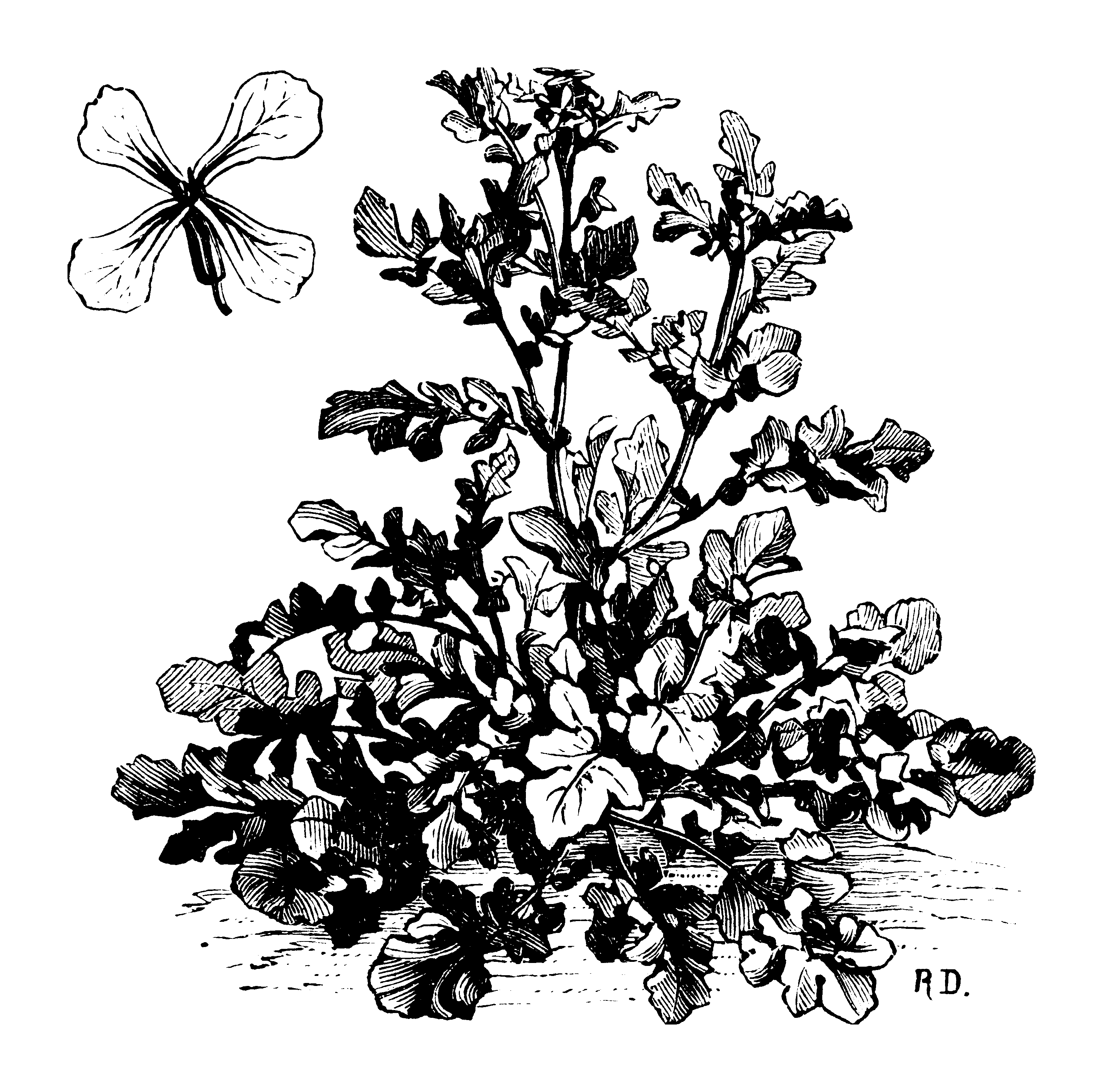
Bolts at the first warm spell, and the small white flowers that follow are worth leaving standing for bees and hoverflies.
Companion planting
What grows well nearby, and what to keep apart.
No research-backed companion pairings for this crop — folk pairings without evidence are left out on purpose.
One of the spicier brassicas, and a fine flea-beetle trap crop: planted as a border it lures the beetles off milder cole crops like broccoli, cabbage and kale. Best with two or three trap species together.
Sources
Growing data on this page is drawn from UC Master Gardeners, Marin County, UC Master Gardeners, San Mateo–SF Counties, and the other references on our sources page.