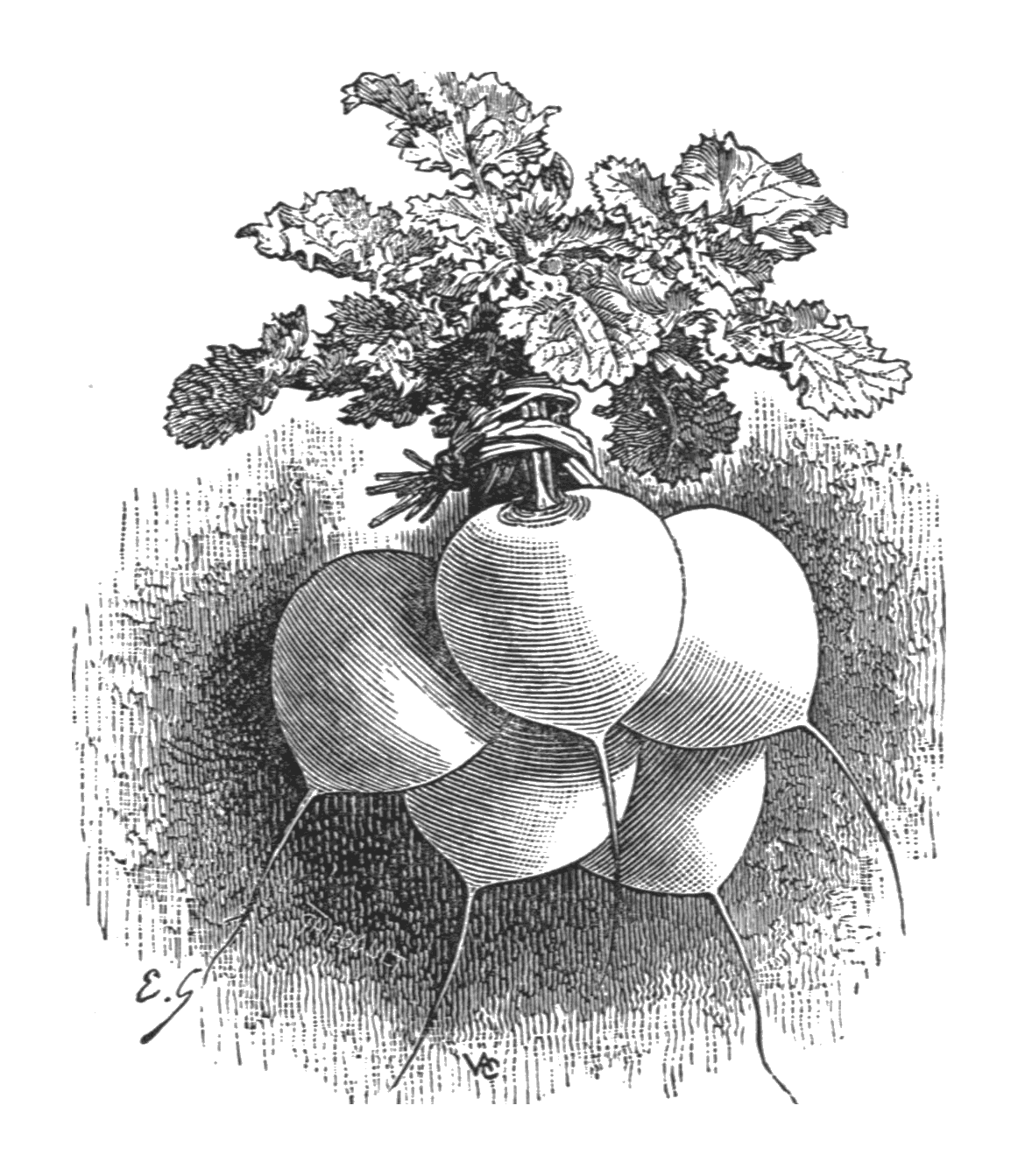
Turnip
Brassica rapa subsp. rapa
Brassicaceae · cabbage family
Origin · temperate Europe · Western Asia
- Matures
- 1–3 months
- Harvest
- Once · Annual
- Sun
- 4–8+ hrs
- Spacing
- 2–6 in
Planting window
When to sow, by microclimate — foggier blocks run a different calendar than sunnier ones.
| Jan | Feb | Mar | Apr | May | Jun | |
|---|---|---|---|---|---|---|
| Foggy | ● | ● | ● | ● | ● | ● |
| Sunny | ● | ● | ● | ● | ● |
| Jul | Aug | Sep | Oct | Nov | Dec | |
|---|---|---|---|---|---|---|
| Foggy | ● | ● | ● | |||
| Sunny | ● | ● |
Sunlight
How well it does at each level of direct sun per day.
Soil depth
Root room it needs — useful for sizing raised beds and containers.
Soil pH
The soil acidity it grows best in — most crops sit just below neutral, so this mostly matters for heavily amended or long-reused beds.
- Preferred range
- pH 6.0–6.5
Spacing
Room each plant needs — along the row and between rows — for sizing beds.
- In-row
- 2–6 in
- Between rows
- 12 in
Growth habit
The shape it makes in the bed and how tall it gets — what tells you whether to give it a trellis, a stake, or just room.
- Habit
- Low mound
- Mature height
- 12–18 in
Low and self-supporting — no staking needed.
Growing in containers
Whether it does well in a pot, planter, or window box — the SF balcony-and-deck question, weighing its footprint, form, and staying power, not just root depth.
Happy in a pot, planter, or window box — no garden bed required.
How to start it
Sow it where it grows, or raise it under cover and set it out — and how far ahead to start the seedlings if it's the latter.
- Usually
- Direct-sow
- Start indoors
- 4 weeks ahead
Sown straight into the bed it will grow in.
Getting started
How it goes in the ground — how deep to sow or set it, and the soil temperature it needs to wake up. The cold-soil floor is the real limiter for direct-sowing in a foggy SF spring.
- Started from
- From seed
- Ideal soil temp
- 60–95°F
- Sow depth
- 0.5 in
- Time to emerge
- 1–3 days
Germinates between 40–105°F; happiest around 60–95°F.
Watering & feeding
How thirsty and how hungry it is — the water it wants and how much feeding the bed needs to keep it producing. In the fog belt even a thirsty crop drinks less than it would inland.
- Water need
- Moderate
- Feeding
- Moderate feeder
Wants steady, even moisture — roughly an inch a week, a little more in a heat spell.
A balanced feed worked into the bed at planting usually carries it through the season.
Water regularly and evenly — swings crack the roots and make them woody and bitter. A moderate feeder.
Pests & diseases
What tends to trouble this crop — what it is, what you'll see, and what to do about it, least-toxic first.
Our sources document no diseases for this crop; the pests listed above are the ones to watch.
Pests5
Aphids
- What it is
- Aphids have soft pear-shaped bodies with long legs and antennae and may be green, yellow, brown, red, or black depending on the species and the plants they feed on. A few species appear waxy or woolly due to the secretion of a waxy white or gray substance over their body surface.
- What you'll see
- Low to moderate numbers of leaf-feeding aphids aren't usually damaging in gardens or on trees. However, large populations can turn leaves yellow and stunt shoots; aphids can also produce large quantities of a sticky exudate known as honeydew, which often turns black with the growth of a sooty mold fungus.
- What to do
- Before planting vegetables, check surrounding areas for sources of aphids and remove these sources. On the other hand, these aphid-infested weeds can sometimes provide an early source of aphid natural enemies.
Armyworms
- What it is
- Armyworm larvae feed in groups, which distinguishes them from other vegetable pests such as corn earworms and loopers. Markings on newly hatched armyworms are usually hard to distinguish from those of other caterpillars; older larvae have distinct lengthwise stripes.
- What you'll see
- Armyworms may feed on the crowns of seedlings. On larger plants, armyworm caterpillars skeletonize leaves.
- What to do
- Handpick. Virus diseases, parasites (Hyposoter and Trichogramma), and general predators may be effective on caterpillars.
Flea Beetles
- What it is
- Their small size, enlarged back legs, characteristic shot-hole damage, and habit of jumping when disturbed make flea beetles easy to identify. There are numerous flea beetle species.
- What you'll see
- Adults feed mostly on leaves, leaving tiny pits or small holes at their feeding sites. Flea beetles feeding together can cover leaves with bleached, pitted areas or ragged holes.
- What to do
- Remove debris in the fall to remove any overwintering beetles. Reflective mulches applied very soon after planting and before plants become infected can be helpful.
Harlequin Bug
- What it is
- Harlequin bugs can be confused with Bagrada bugs, an invasive species, but are much larger and lack the white markings characteristic of Bagrada bugs. Harlequin bugs may also be confused with stink bugs.
- What you'll see
- Harlequin bugs suck fluids from plant tissue. They leave yellow or white blotches on areas of leaves where they have been feeding; heavy infestations can cause plants to wilt, turn brown, and die.
- What to do
- Handpick bugs or their eggs. Destroy old cole crop plants and mustards because they provide breeding areas.
Loopers
- What it is
- Loopers are green caterpillars with several white stripes down their backs. They arch their backs as they crawl, this looping movement giving them their name.
- What you'll see
- Loopers eat irregular holes in leaves, most often older leaves. They may also bore holes in lettuce and cabbage heads or damage fruit.
- What to do
- Handpick. Apply Bacillus thuringiensis or spinosad; they are effective against loopers, especially when caterpillars are small.
Harvest & storage
How to tell it's ready to pick, and how to keep it once it's in.
- Keeps
- WeeksHolds a week or two in the fridge.
- Ready to harvest
- Pull the roots at about 2-3 in across while still tender; the flavour is best in cool weather.
- Storing
- Twist off the tops and refrigerate the roots; they keep a couple of weeks, longer held cold.
Culinary use & nutrition
What it's for in the kitchen, and the nutrients a 100 g raw serving is a notable source of.
In the kitchen
- Raw
- Boiled / steamed
- Soups & stews
- Pickled / preserved
Nutrition highlights
- Excellent source
- Vitamin C
Share of the Daily Value in a 100 g raw serving (USDA FoodData Central).
Pollinators & wildlife
What this crop offers the garden's wildlife once it flowers — often the payoff for letting a bolting plant stand.
- Bees
- Honeybees and natives — bumble, mason, and sweat bees — working the flowers for pollen and nectar.
- Beneficial insects
- Hoverflies, lady beetles, and parasitoid wasps that keep aphids and caterpillars down.
A row left to bolt goes yellow overhead, and sweat bees and hoverflies work it right through to seed set.
Companion planting
What grows well nearby, and what to keep apart.
Plant nearby
Flea beetles riddle turnip greens — plant spicier brassicas (arugula, mustard, napa cabbage) as a trap crop to draw them off, mixing a few trap species for the best result.
Sources
Growing data on this page is drawn from UC Master Gardeners, San Mateo–SF Counties, Golden Gate Gardening (Pam Peirce), and the other references on our sources page.