Growing Peas in San Francisco: A Cool-Season Guide
Peas do well on either side of the fog line, but the sowing window depends on which one you're on, so get the timing right, then give the vines something to climb.
Peas are the crop San Francisco was made for. Inland gardeners race to get a harvest in before summer heat arrives, because heat is what costs a pea its quality. Here the cool, foggy air lets the vines take their time, and on the foggiest blocks the sowing window runs from February clear through November. So growing peas in San Francisco comes down to two decisions: sowing at the right moment for your block, and giving the vines something to climb before they need it.
When to plant
Forget the packet-back advice written for places with a real winter. San Francisco's limiting factor is fog, not frost, so the window is set by which side of the fog line you garden on.
On foggy blocks (the Sunset, the Richmond, anywhere the marine layer parks for the afternoon), peas go in as seed from February through November. Ten months. That is why the local calendar looks nothing like the back of the packet.
On sunnier inland blocks (the Mission, Bernal, SoMa), the window splits in two: February, then August through November. March through July are off there, because those blocks build enough summer heat to cost you the pods.
Cold ground is the other half of the timing question. Peas will germinate down at 40°F, but slowly and unevenly, and seeds sitting in cold wet soil tend to rot instead. That argues for the late-summer sowing over the February one on a foggy block, where the ground warms late and reluctantly. Check the planting calendar for the exact window in your neighborhood, because the Sunset side and the Mission run months apart, not weeks.
Overwintering: sowing in fall so a hardy crop grows slowly through winter and matures the following spring. SF's frost-free winters make it low-risk here, unlike most of the country.
Depth and spacing
Peas are forgiving, but a few numbers matter. The one that decides your trellis is habit, not whether you bought shelling, snap, or snow seed, since all three come in both forms.
| Habit | Sow depth | In-row spacing | Support height |
|---|---|---|---|
| Bush or dwarf | 1 in | 2–6 in | 2–3 ft |
| Tall vining | 1 in | 2–6 in | up to 5 ft |
Leave about 36 inches between rows, and count on 60 to 80 days from sowing to the first picking. Sow a little thicker than you think you need and thin later, because germination in cold soil is patchy and pea seedlings don't mind a crowd. For the full per-variety profile, see the pea page in the catalog.
Trellis before sowing
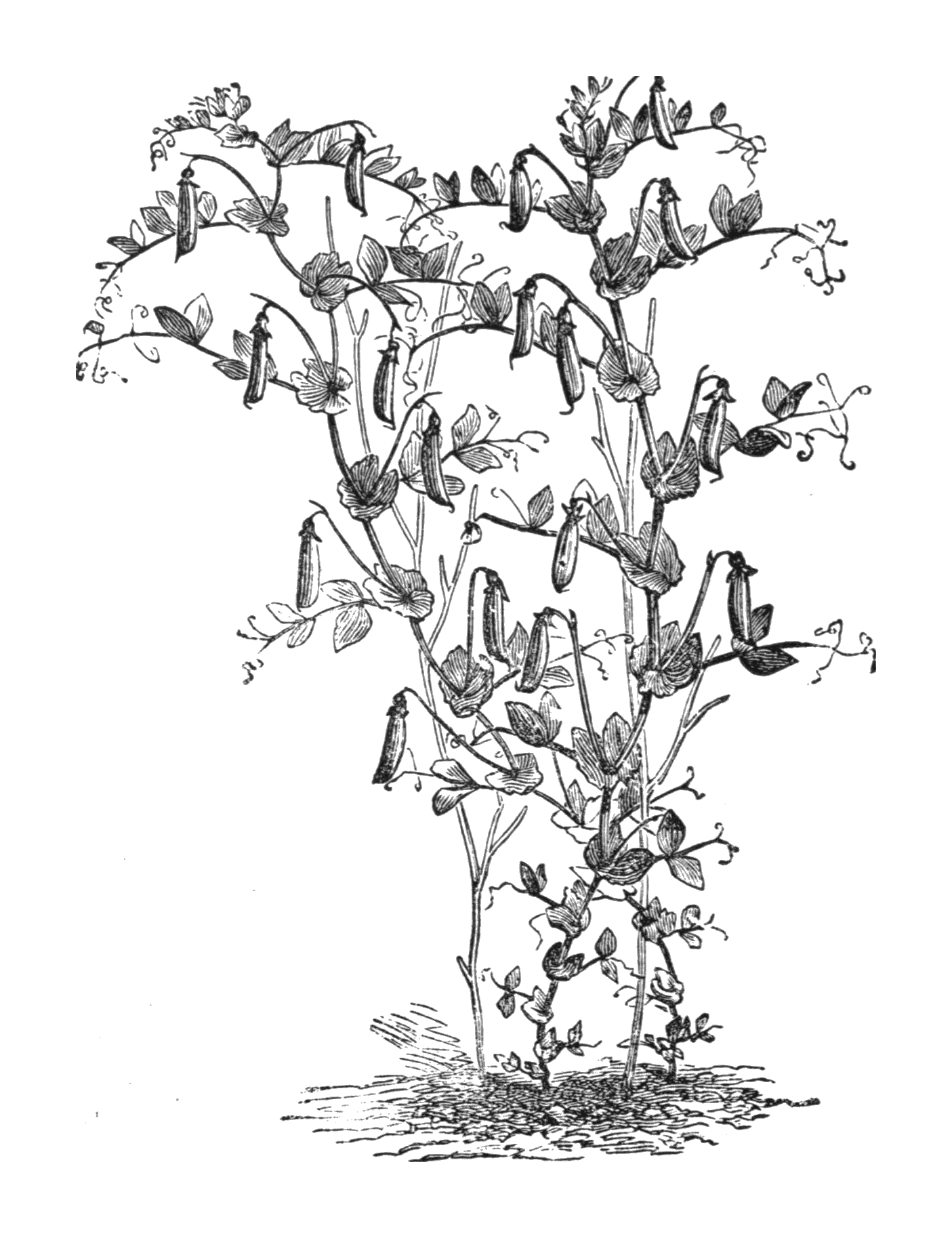
The most common pea failure is a row sown with nothing to climb. The vines come up, flop over, and spend the rest of the season sprawled in the mud growing mildew. Peas climb with tendrils, and tendrils need something thin to wrap around: netting, twine, brush, chicken wire. A tomato cage is too fat.
Tall varieties are the ones that genuinely need the structure, and they get to about five feet. Bush and dwarf types stop at two or three and will lean on each other, though even they stay cleaner off the ground.
Give a pea vine a fence and it will feed you for two months; give it the bare ground and it will feed the slugs.
Put the support in before or at sowing, not after. Once the vines are up, you'll snap them trying to thread them onto a trellis you should have built first.
Problems to watch for
Two mildews and one bird problem. The mildews want opposite things from your hose, so the diagnosis matters more than the treatment.
Powdery mildew starts as yellow spots on the upper surface of older leaves, then turns into the familiar white dust that spreads to the undersides and stems, and the pods pick up brownish spots. Warm dry days, cool damp nights, and shade are what favor it. So the fixes run counterintuitive: give peas the sunniest spot you have, keep air moving through the row, and go easy on the fertilizer. Overhead sprinkling can actually lower powdery mildew, because the spores cannot germinate in free water.
Downy mildew wants the reverse, and it is the more likely fog-belt visitor. White to purple cottony growth appears on the leaf undersides with yellow blotches on top, and it needs standing moisture on the leaf to infect at all. For that one, keep the leaves as dry as you can and let plants dry out between waterings. Since one is helped by a wet leaf and the other is fed by it, work out which you have before you touch the hose. Telling powdery from downy mildew is most of the job.
Birds will strip a freshly sown row. A floating row cover until the seedlings are a few inches tall solves it.
Frequently Asked Questions
Can I grow peas year-round in San Francisco?
Close to it on a foggy block, where the seeding window runs February through November. On a sunnier inland block the answer is different: February, then August through November, with March through July off because those blocks build enough heat to cost you the pods.
Do peas need full sun in the fog belt?
They'll take full sun where you can get it, but peas tolerate part shade better than most fruiting crops, which is a real advantage on foggy blocks. Aim for at least four to six hours. Sun is also your best lever against powdery mildew, which favors shade.
Should I soak pea seeds before planting?
You can, and it speeds germination in cold soil by a day or two, but it isn't required. If you soak, keep it to a few hours, since overnight-soaked peas can split or rot in cold, wet ground.
Sources: UC Master Gardeners of San Mateo & San Francisco planting calendars, the UC Master Gardeners of Sonoma County vegetable planting summary, the UC Master Gardener seed germination temperature table, University of Minnesota Extension on growing peas, UC IPM on powdery mildew in peas and beans, and UC IPM on downy mildew in peas.